

Introduction: Navigating Your Custom Plush Journey
Embarking on a custom plush project requires understanding both creative possibilities and practical realities. As a premier 맞춤형 봉제 제작자, DearPlush is dedicated to providing complete transparency about 맞춤 봉제 인형 가격 and production processes. This comprehensive guide offers detailed insights into cost structures and manufacturing workflows, empowering you to make informed decisions with confidence.
Section 1: Detailed Pricing Structure Analysis
1.1 Design Phase Investment
The design phase establishes the foundation for your custom plush creation, typically accounting for 12-28% of total project cost.
Design Service Breakdown:
Concept Development Tiers:
- 기본 사용자 지정: $100-$400 design fee
- Color changes to existing patterns
- Simple embroidery additions
- Minor size adjustments
- Standard Design Creation: $400-$1,500 design fee
- Original character development
- Moderate complexity (4-8 pattern pieces)
- Standard detailing and features
- Premium Design Engineering: $1,500-$4,000 design fee
- Complex character development
- High detail levels (8+ pattern pieces)
- Technical features and mechanisms
Design Complexity Impact:
Simple Designs: +$0.40-$1.20 per unit in production
Moderate Designs: +$1.20-$3.50 per unit in production
Complex Designs: +$3.50-$10.00 per unit in production
1.2 Material Cost Considerations
Material selection significantly impacts both quality and 맞춤 봉제 인형 가격, typically representing 32-48% of total cost.
Fabric Cost Spectrum:
Standard Plush Materials:
- Economy Grade: $4.00-$7.00 per yard
- 140-180 gsm, basic colors
- Standard Grade: $7.00-$11.00 per yard
- 180-220 gsm, good color retention
- Premium Grade: $11.00-$17.00 per yard
- 220-280 gsm, excellent softness
- Luxury Grade: $17.00-$32.00 per yard
- 280-350 gsm, specialized textures
Specialty Material Options:
- Minky Fabrics: $7.50-$14.00 per yard
- Faux Fur: $9.00-$22.00 per yard
- Organic Materials: $12.00-$25.00 per yard
- Performance Fabrics: $14.00-$28.00 per yard
구성 요소 비용 분석:
- Safety eyes/noses: $0.05-$0.35 per set
- Premium fiberfill: $1.50-$2.60 per pound
- Embroidery supplies: $2.00-$6.50 per 1,000 yards
- Sound components: $2.50-$22.00
- LED systems: $1.25-$7.00
- Joint mechanisms: $3.50-$18.00
1.3 Size-Based Pricing Framework
Size directly correlates with material consumption and production time, following this structure:
Production Cost by Size:
Mini (2-4"): $3.00-$8.00
• Fabric: 0.07-0.22 yards
• Stuffing: 0.4-1.3 ounces
• Production time: 5-11 minutes

Small (5-8"): $8.00-$20.00
• Fabric: 0.22-0.55 yards
• Stuffing: 1.3-3.5 ounces
• Production time: 11-18 minutes

Medium (9-14"): $20.00-$43.00
• Fabric: 0.55-1.10 yards
• Stuffing: 3.5-7.0 ounces
• Production time: 18-32 minutes

Large (15-20"): $43.00-$99.00
• Fabric: 1.10-1.80 yards
• Stuffing: 7.0-12.6 ounces
• Production time: 32-50 minutes

Extra Large (21"+): $99.00-$250.00+
• Fabric: 1.80+ yards
• Stuffing: 12.6+ ounces
• Production time: 50+ minutes
1.4 Volume Discount Structure
Production efficiency improves with quantity, creating substantial per-unit savings:
Quantity-Based Pricing:
- Prototype (1-2 units): Base price + 35-55%
- Small Batch (3-22 units): Base price + 12-22%
- Production Run (23-89 units): 4-12% below base
- Volume Order (90-224 units): 12-27% below base
- Mass Production (225-899 units): 27-41% below base
- Manufacturing Scale (900+ units): 41-58% below base
1.5 Custom Feature Pricing
Special features enhance functionality and appeal with these cost implications:
Feature Enhancement Options:
- Embroidery Services:
• Small designs: $2.25-$7.20
• Medium designs: $7.20-$16.20
• Large designs: $16.20-$36.00+ - Printing Applications:
• Single color: $2.70-$9.00
• Multi-color: $4.50-$18.00
• Full coverage: $6.00-$24.00 - Interactive Elements:
• Basic sound: $3.15-$10.80
• Advanced sound: $10.80-$31.50
• Motion features: $7.20-$22.50
• Lighting systems: $4.50-$19.80 - Structural Features:
• Posable frames: $4.05-$16.20
• Weighted bases: $2.70-$10.80
• Removable parts: $2.25-$13.50
Section 2: Manufacturing Process Excellence
Phase 1: Planning & Preparation (4-6 Business Days)
Initial Week Activities:
- Consultation Session: Comprehensive project review
- Feasibility Analysis: Technical and practical assessment
- Budget Development: Detailed cost estimation
- Timeline Creation: Realistic milestone planning
- Material Planning: Quality and quantity calculations
Phase 2: Design Development (9-14 Business Days)
Design Phase Workflow:
- Concept Visualization (2-4 days): Sketches and renderings
- Technical Development (3-6 days): Pattern creation
- Material Selection (1-3 days): Swatch approval
- Prototyping (4-7 days): Sample creation
Quality Verification Steps:
- Dimensional accuracy (±1.5mm tolerance)
- Stitch density verification (7-11 stitches per inch)
- Color consistency across materials
- Preliminary safety compliance
- Functional feature testing
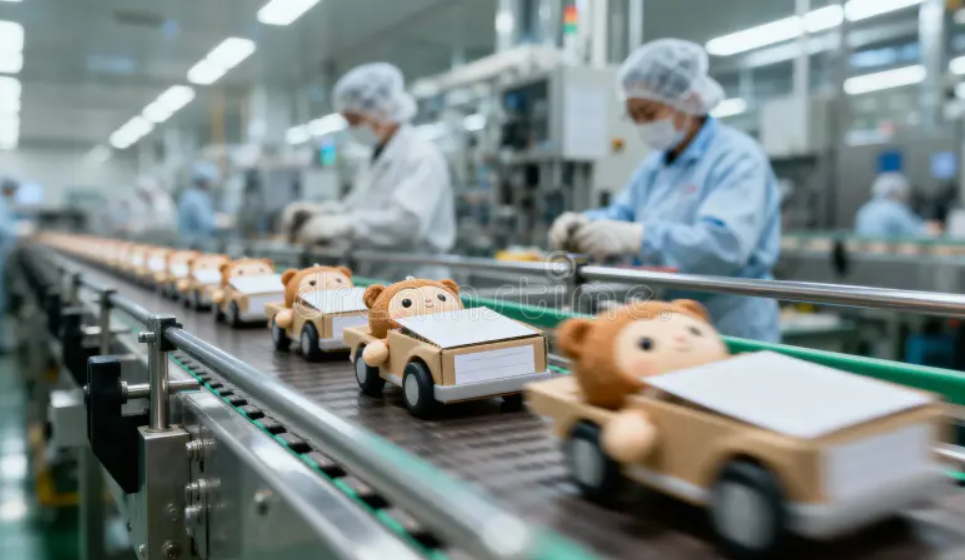
Phase 3: Production Execution (16-29 Business Days)
Manufacturing Timeline:
Week 1: Material preparation and setup
Week 2: Precision cutting and component preparation
Week 3-4: Assembly and construction
Week 5: Finishing and detailing
Week 6: Quality assurance and preparation
Quality Assurance Protocol:
- Material quality verification
- Cutting precision validation
- In-process construction monitoring
- Assembly completion inspection
- Final product evaluation
- Safety standards compliance
- Random sampling validation
Phase 4: Delivery & Support (2-6 Business Days)
Post-Production Services:
- Custom packaging solutions
- Shipping coordination and tracking
- Documentation preparation
- Quality guarantee activation
- Future planning consultation
Section 3: Strategic Cost Optimization
Design Efficiency Approaches
- Simplify complex elements where possible
- Use standard color options
- Consider modular design concepts
- Focus detailing on high-impact areas
Production Planning Strategies
- Consolidate multiple designs
- Schedule during optimal periods
- Balance quantity with practical needs
- Implement phased development approach
Value Enhancement Methods
- Incorporate multi-functional features
- Prioritize high-value elements
- Invest in quality materials
- Design effective packaging
Section 4: The DearPlush Advantage
Technical Expertise Benefits
- Advanced pattern optimization
- Innovative construction techniques
- Efficient material utilization
- Problem-solving capabilities
Supply Chain Advantages
- Direct material sourcing
- Consolidated purchasing power
- Quality control integration
- Inventory management efficiency
Technological Capabilities
- Digital design systems
- Precision manufacturing equipment
- Automated quality monitoring
- Advanced embroidery technology
Ethical Manufacturing Standards
- Fair labor practices
- Environmental responsibility
- Sustainable material options
- Transparent operations
Conclusion: Making Informed Decisions
이해 맞춤 봉제 인형 가격 and manufacturing processes enables confident decision-making. DearPlush provides the expertise, transparency, and quality needed to bring your vision to life successfully.
Next Steps:
- Define your project requirements
- Gather necessary reference materials
- Contact our expert team
- Receive detailed proposal
- Begin creative collaboration
DearPlush: Your Partner in Custom Plush Excellence.
Contact us today to start your custom plush journey with confidence and clarity.
 English
  Chinese
  Arabic
  French
  German
  Spanish
  Japanese
  Korean
  Russian
  Portuguese
최신 댓글